
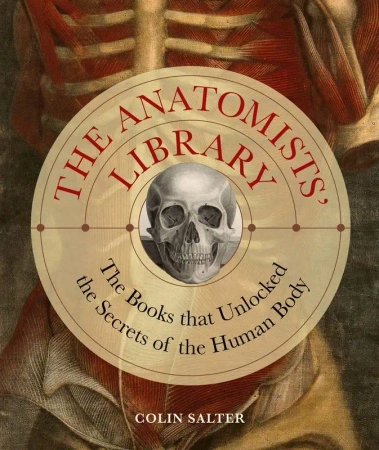
The Anatomists' Library - Colin Salter
The Anatomist's Library is a fascinating chronological collection of the best anatomical books from six centuries, charting the evolution of both medical knowledge and illustrated publishing. There is a rich history of medical publishing across Europe with outstanding publications from Germany, France, Italy, Netherlands, Spain, UK, and also many from Persia and Japan. Because of the high value of accurate medical textbooks, it was these works that pushed the boundaries of illustrated publishing.
They commanded the expert illustrators and skilled engravers and hence didn’t come cheaply. They were treasured by libraries and their intrinsic worth has meant that there is an incredible wealth of beautifully preserved historic examples from the 15th century onwards The enduring popularity of Gray’s Anatomyhas shown that there is a long-term interest in the subject beyond the necessity of medical students to learn the modern equivalent – the 42nd edition (2020) – from cover to cover. But Englishman Henry Gray was late in the field and never saw the enduring success of his famous work.
Having first published the surgeon’s reference book in 1858, he died in 1861 after contracting smallpox from his nephew (who survived). He was just 34. Gray was following on from a long tradition of anatomists starting with Aristotle and Galen whose competing theories about the human body dominated early medicine.
However they did not have the illustrative skills of Leonardo da Vinci who was trained in anatomy by Andrea del Verrocchio. In 1489 Leonardo began a series of anatomical drawings depicting the human form. His surviving 750 drawings (from two decades) represent groundbreaking studies in anatomy.
However none of Leonardo's Notebooks were published during his lifetime, they only appeared in print centuries after his death. Brussels-born Andries van Wesel (Andreas Vesalius) professor at the University of Padua is deemed to be the founder of modern anatomical reference with his 1543 work De Humani Corporis Fabrica Libri Septem ("On the fabric of the human body in seven books"). An Italian contemporary was Bartolomeo Eustachi who supported Galen’s medical theories.
Among other discoveries he correctly identified the Eustachian tube and the arrangement of bones in the inner ear. His Anatomical Engravings were completed in 1552, nine years after Vesalius’s great work, but remained unpublished until 1714. These are just two entries in a book brimming with an abundance of important illustrated works – with some more primitive examples from the 15th century, up to the 42nd edition of Gray’s in the 21st.
EAN: 9780711280748


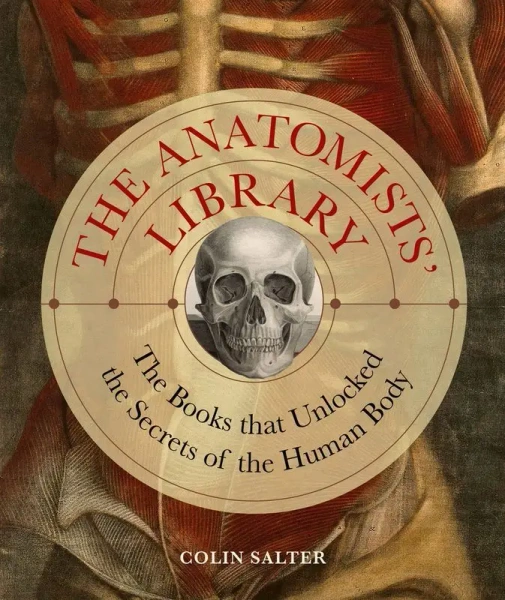
The Anatomist's Library is a fascinating chronological collection of the best anatomical books from six centuries, charting the evolution of both medical knowledge and illustrated publishing. There is a rich history of medical publishing across Europe with outstanding publications from Germany, France, Italy, Netherlands, Spain, UK, and also many from Persia and Japan. Because of the high value of accurate medical textbooks, it was these works that pushed the boundaries of illustrated publishing.
They commanded the expert illustrators and skilled engravers and hence didn’t come cheaply. They were treasured by libraries and their intrinsic worth has meant that there is an incredible wealth of beautifully preserved historic examples from the 15th century onwards The enduring popularity of Gray’s Anatomyhas shown that there is a long-term interest in the subject beyond the necessity of medical students to learn the modern equivalent – the 42nd edition (2020) – from cover to cover. But Englishman Henry Gray was late in the field and never saw the enduring success of his famous work.
Having first published the surgeon’s reference book in 1858, he died in 1861 after contracting smallpox from his nephew (who survived). He was just 34. Gray was following on from a long tradition of anatomists starting with Aristotle and Galen whose competing theories about the human body dominated early medicine.
However they did not have the illustrative skills of Leonardo da Vinci who was trained in anatomy by Andrea del Verrocchio. In 1489 Leonardo began a series of anatomical drawings depicting the human form. His surviving 750 drawings (from two decades) represent groundbreaking studies in anatomy.
However none of Leonardo's Notebooks were published during his lifetime, they only appeared in print centuries after his death. Brussels-born Andries van Wesel (Andreas Vesalius) professor at the University of Padua is deemed to be the founder of modern anatomical reference with his 1543 work De Humani Corporis Fabrica Libri Septem ("On the fabric of the human body in seven books"). An Italian contemporary was Bartolomeo Eustachi who supported Galen’s medical theories.
Among other discoveries he correctly identified the Eustachian tube and the arrangement of bones in the inner ear. His Anatomical Engravings were completed in 1552, nine years after Vesalius’s great work, but remained unpublished until 1714. These are just two entries in a book brimming with an abundance of important illustrated works – with some more primitive examples from the 15th century, up to the 42nd edition of Gray’s in the 21st.
EAN: 9780711280748